
Diabetic Foot Syndrome: Why Every Diabetic Patient Must Check The
This week at our clinic, we managed a patient with an infected diabetic foot ulcer that required surgical debridement under strict aseptic precautions. The wound had progressed silently for weeks before the patient noticed anything was wrong — a pattern we see far too often. This is exactly why we are writing this piece: diabetic foot disease is largely preventable, but only if patients know what to look for and act early.
Diabetic foot syndrome refers to a group of foot problems that occur in people with diabetes as a result of two main processes:
- Peripheral neuropathy — nerve damage that reduces or eliminates the ability to feel pain, heat, or injury in the feet
- Peripheral artery disease (PAD) — reduced blood flow that slows healing and increases the risk of infection
Together, these mean a person can develop a cut, blister, or pressure sore and not feel it — and once it forms, poor circulation makes it much harder to heal. Left unchecked, this can progress to ulceration, infection, and in severe cases, amputation.
According to the 2023 International Working Group on the Diabetic Foot (IWGDF) guidelines — the internationally recognised standard for diabetic foot care — prevention rests on a few core pillars: regular risk-based screening, patient education on self-care, appropriate footwear, and prompt treatment of any pre-ulcerative lesion before it becomes a full ulcer. The IWGDF specifically recommends that people at very low risk be screened annually for loss of protective sensation and PAD, while those at higher risk should be assessed more frequently for additional risk factors.
The American Diabetes Association's Standards of Care in Diabetes–2026 echoes this, recommending a comprehensive foot examination at least once a year for every person with diabetes — including inspection of the skin, checking for foot deformities, a neurological assessment (such as the 10-gram monofilament test), and a vascular assessment of pulses in the legs and feet. The 2026 update also highlights emerging technologies in foot care and newer adjunctive therapies for foot ulcers, reflecting how quickly this field is evolving.
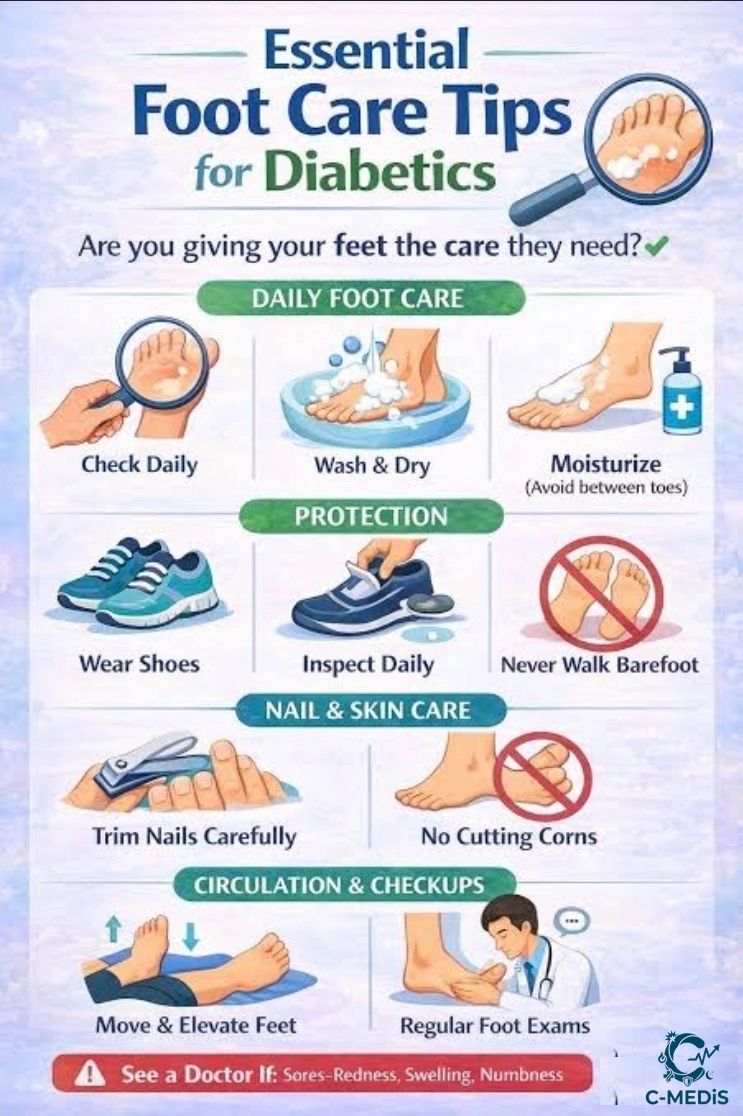
- Inspect your feet every single day. Check the top, sole, heel, and between the toes. Use a mirror or ask a family member if you cannot see the sole clearly.
- Look for: cuts, blisters, redness, swelling, corns, calluses, cracked skin, discoloration, or any wound — however small.
- Wash your feet daily with lukewarm (not hot) water, and dry thoroughly, especially between the toes.
- Moisturize the skin but avoid applying lotion between the toes, where excess moisture can encourage fungal infection.
- Never walk barefoot — indoors or outdoors.
- Trim toenails straight across to prevent ingrown nails, and avoid cutting corns or calluses yourself.
- Wear well-fitting, protective footwear at all times. The IWGDF specifically recommends therapeutic or accommodative footwear for those at moderate-to-high risk.
- Never ignore a wound "because it doesn't hurt." Numbness is precisely what makes diabetic foot injuries dangerous — the absence of pain does not mean the absence of damage.
- Do not self-treat an infected-looking wound. Redness, warmth, swelling, discharge, or a foul odor need urgent medical attention, not home remedies.
Please come in without delay if you notice:
- A wound, blister, or sore that isn't healing within a few days
- Redness, swelling, warmth, or pus around any skin break
- A foul smell from a wound
- Sudden changes in foot color or temperature
- New numbness, tingling, or pain in the feet or legs
- Any deformity or unusual shape change in the foot (this can be a sign of Charcot foot, a serious complication)
An annual, formal diabetic foot examination — including monofilament sensory testing, pulse checks, and skin/deformity assessment — can catch problems long before you would notice them yourself. This is a core recommendation across both IWGDF and ADA guidelines, and it is a service we offer as part of our metabolic and diabetic foot care program at C-MEDIS.
If you have diabetes and haven't had a foot check in the last year — or if something about your feet doesn't feel or look right — please don't wait. Diabetic foot complications are among the most preventable, yet most costly, complications of diabetes when caught late.
References
- International Working Group on the Diabetic Foot (IWGDF). Guidelines on the Prevention of Foot Ulcers in Persons with Diabetes (2023 update). Diabetes Metab Res Rev. 2024;40(3):e3651.
- International Working Group on the Diabetic Foot (IWGDF). Practical Guidelines on the Prevention and Management of Diabetes-Related Foot Disease (2023 update). Available at: iwgdfguidelines.org
- International Working Group on the Diabetic Foot (IWGDF). Guidelines on Interventions to Enhance Healing of Foot Ulcers in People with Diabetes (2023 update). Diabetes Metab Res Rev. 2024;40(3):e3644.
- American Diabetes Association. Standards of Care in Diabetes—2026. Diabetes Care. Published December 8, 2025.
This article is for general patient education and does not replace individual medical advice. If you have diabetes, please consult your physician for a personalized foot care and screening plan.
SB Health / C-MEDIS
Alandur (SB Speciality Clinic & Diagnostics) & Kovilambakkam (SB Health) "Precision Care for Metabolic Health & Lifelong Wellness"