
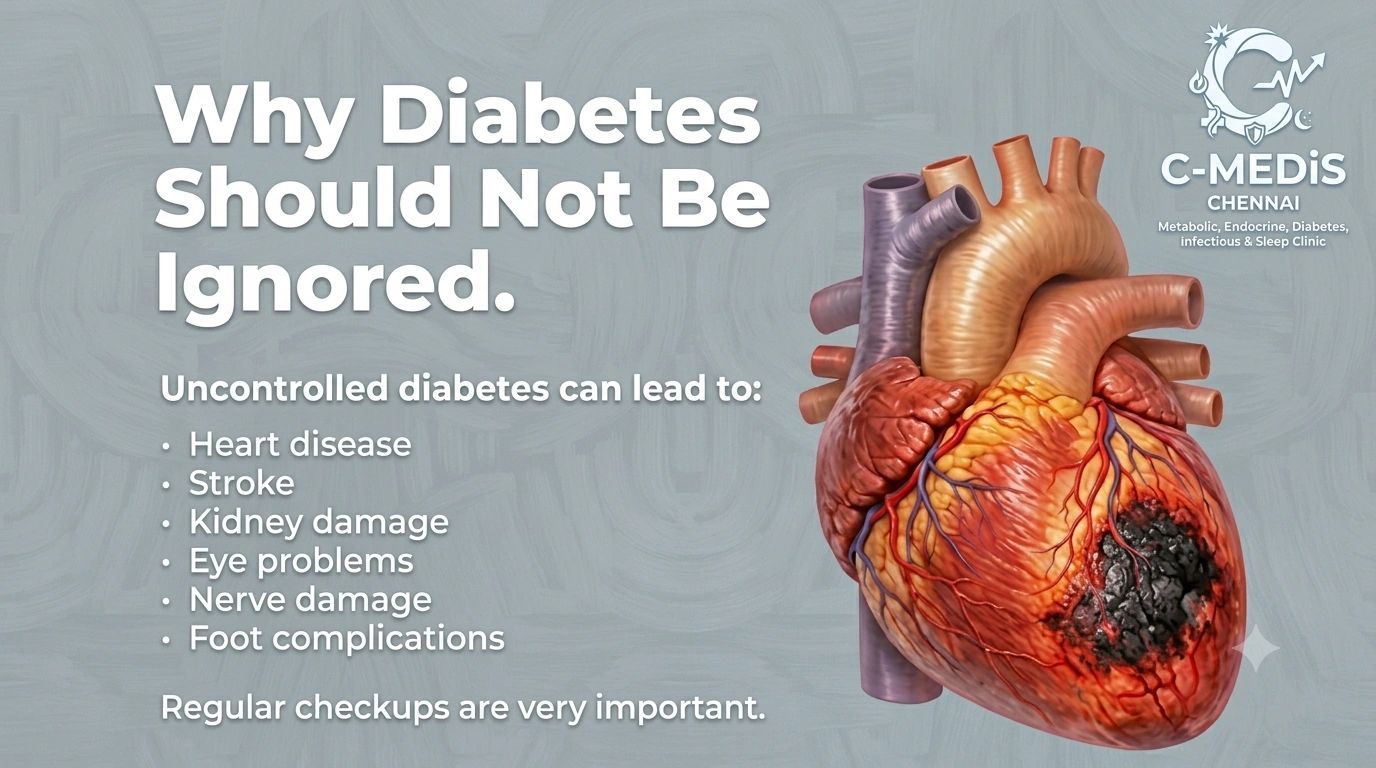
Why Skipping Your Diabetes Follow-Up Could Be Costing You More…
"I'm feeling fine, doctor — why do I need to come back so soon?"
This is one of the most common things we hear at C-MEDIS from our diabetic patients. And it's understandable — when you feel well, a follow-up visit can feel like an unnecessary interruption to a busy life. But diabetes is a condition that often causes damage silently, long before you feel any symptoms. By the time you "feel" something is wrong, the damage may already be done — and much harder to reverse.
Why "feeling fine" doesn't mean your sugars are controlled
High blood sugar doesn't announce itself. Nerve damage, kidney stress, and blood vessel changes build up quietly over months and years. A missed follow-up isn't just a missed appointment — it's a missed opportunity to catch a problem while it's still fixable.
What regular follow-ups actually do for you
- Track control over time: A single sugar reading tells you about today. HbA1c and periodic reviews tell us your 3-month trend — the number that predicts your future complications.
- Adjust treatment before things go wrong: Medication needs change as your body, weight, activity, and stress levels change. Regular review means your treatment evolves with you instead of falling behind.
- Catch complications early: Kidney, eye, nerve, and heart involvement in diabetes are far easier to manage — and often reversible — when caught early.
The routine investigations we recommend, and why
- HbA1c (every 3 months): Your average sugar control over the last 3 months.
- Kidney function test & urine microalbumin (annually, or more often if abnormal): Diabetes is a leading cause of kidney damage — often silent until advanced stages.
- Lipid profile (annually): Diabetes and cholesterol together significantly raise heart attack and stroke risk.
- Eye examination / fundus check (annually): Diabetic retinopathy can cause vision loss with no early warning signs.
- ECG and cardiac risk assessment (as advised): Diabetics are at higher risk of silent heart disease.
- Thyroid function test (periodically): Thyroid disorders commonly coexist with diabetes and affect sugar control.
- Comprehensive diabetic foot examination (at every visit): Nerve and blood vessel damage can lead to unnoticed injuries that progress to serious infections.
Vaccination — an often-overlooked part of diabetes care
Diabetes affects the immune system, making infections more frequent and more severe. We recommend:
- Influenza (flu) vaccine — annually
- Pneumococcal vaccine — as per age and risk profile
- Hepatitis B vaccine — especially relevant given frequent blood tests and injections
- COVID-19 vaccine — as per current national guidelines
These aren't optional extras — for a diabetic patient, a routine infection can escalate quickly and disrupt sugar control itself, creating a vicious cycle.
Foot care: small habit, big protection
Diabetic foot complications are one of the most preventable yet most devastating outcomes of poorly monitored diabetes.
Simple daily habits — checking your feet for cuts or blisters, wearing proper footwear, keeping feet clean and moisturized, and never walking barefoot — combined with a professional foot check at every visit, can prevent the vast majority of diabetic foot ulcers and amputations.
The bottom line
Regular follow-up isn't about "coming to the doctor too often." It's about staying ahead of a condition that, left unchecked, progresses silently. The 20–30 minutes you spend with us every few months is what protects your eyes, kidneys, heart, nerves, and feet for decades to come.
If it's been a while since your last review, don't wait for a symptom to bring you back. Book your follow-up today.
— Dr. Sai Lakshmikanth Bharathi MD
C-MEDIS – Metabolic, Endocrine, Diabetes, Infectious & Sleep Clinic
Precision Care for Metabolic Health & Lifelong Wellness